News
- Meeting Held at Baku Business University
- Knowledge Day Event Held at Baku Business University
- Baku Business University Announces Admission to Vacant Master’s Degree Places
- Attention Students Admitted to Baku Business University!
- Attention Students Admitted to Baku Business University!
- Üfüq Student Residence is at your service to make student life more comfortable and convenient.
- August 12 – International Youth Day!
- Attention Doctoral Students and Young Researchers!
- Baku Business University Successfully Participated in the Higher Education Institutions Fair Organized by the State Examination Center
- Scientific Seminar Dedicated to the Independence Day of the Republic of Azerbaijan Held in Budapest
Within the framework of cooperation between Baku Business University and the Karabakh Training Center, a 3-day training program on economic development and innovative entrepreneurship in Karabakh was organized.

As part of the “Year of Urban Development and Architecture”, the program was implemented jointly by Baku Business University and the Karabakh Training Center. The main objective of the program was to provide academic staff and students of the University with on-site familiarity with the successful urban planning, restoration, and reconstruction processes carried out in the liberated territories, to study the rich architectural heritage of Karabakh, and at the same time to develop the startup, innovation, and entrepreneurship skills of teachers and students through training sessions. All logistics and training modules of the program were designed by the Karabakh Training Center, the project coordinator, based on a special methodology.
On the first day of the program, participants were provided with detailed information about reconstruction and development works carried out in Karabakh during the journey, accompanied by a guide. The participants visited the Aghdam Juma Mosque, Aghdam Martyrs’ Alley, Asgaran Fortress, the city of Khojaly, and the Victory Park established in the city of Khankendi.
Within the framework of the program, during the industrial and production excursion, the academic staff and students visited “Karabakh Textile House” LLC, operating in the city of Khankendi. The excursion contributed to developing practical understanding among teachers and students about the emerging economic environment in the region, organization of production processes, employment opportunities, and local economic revitalization.
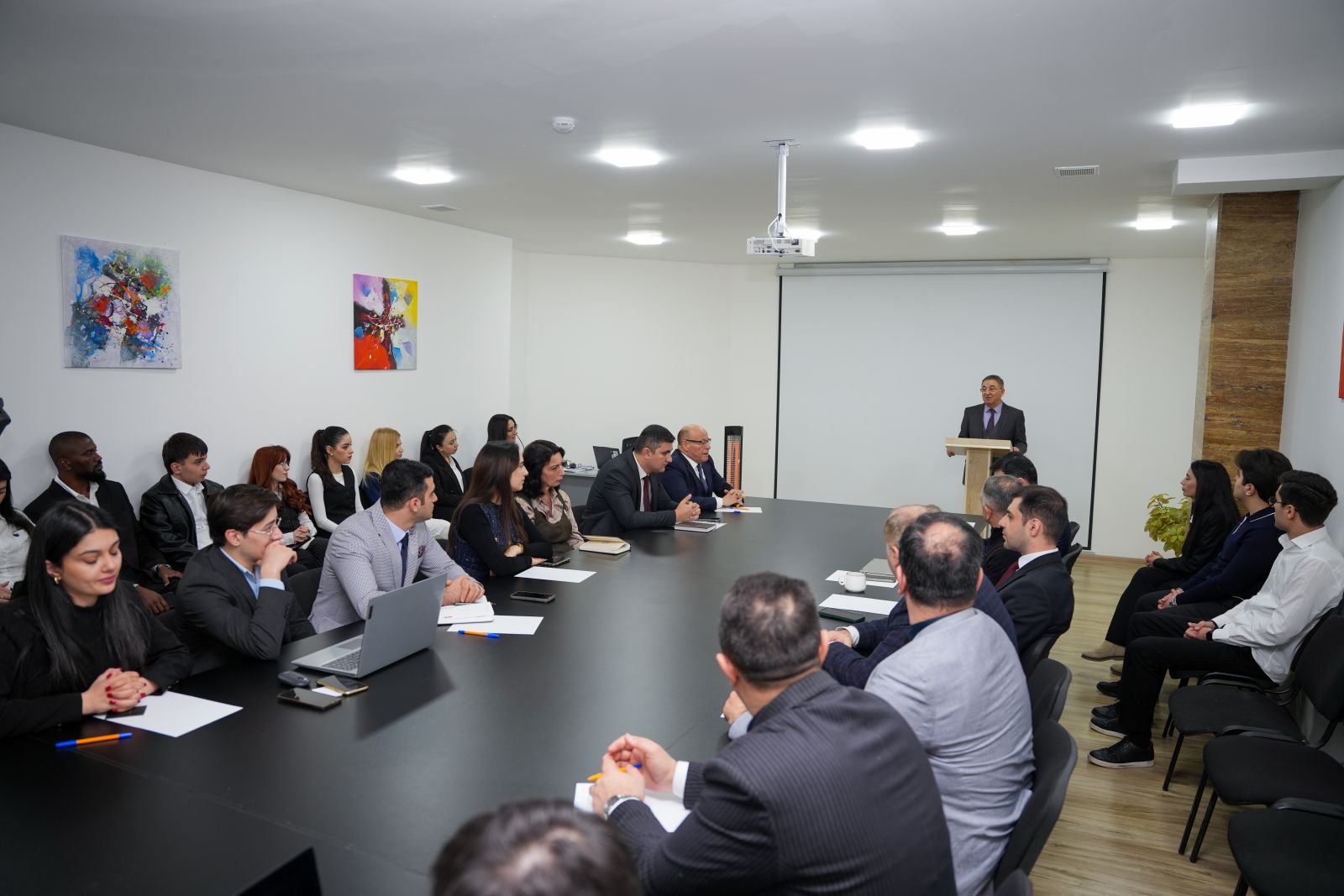
On the second day of the program, a presentation of the joint project “Startup School Karabagh”, implemented by the Karabakh Training Center together with the Center for Analysis of Economic Reforms and Communication through the Enterprise Azerbaijan and Azexport portals, was held in Khankendi. The event took place with the active participation of numerous academic staff members and students of Baku Business University. The purpose of the event was to promote innovative thinking, improve understanding of Karabakh’s economic potential, and increase interest in startup initiatives.
The event was opened with an introductory speech by Aytan Mammadova, Director of the Karabakh Training Center, who provided information on the main objectives of the project, the importance of established partnerships, and the significant contribution of such initiatives to youth development. A. Mammadova emphasized that the center aims to serve as a key platform for developing human capital in Karabakh and integrating young entrepreneurs into the region.
Later, the Rector of Baku Business University, Doctor of Economic Sciences, Professor Ibad Abbasov, highlighted the opportunities created for young people by the new socio-economic environment emerging in the liberated territories, the importance of university–industry cooperation, the role of innovative entrepreneurship in sustainable regional development, and the importance of transforming students’ theoretical knowledge into practical skills. The Rector also noted that such programs strengthen students’ entrepreneurial competencies and provide opportunities for direct engagement with real economic processes.
Alakbar Mammadov, Head of the Karabakh Territorial Tax Administration, delivered a detailed speech on tax incentives and the investment environment applied in the liberated territories. He provided practical recommendations to students and young participants regarding career prospects, including entrepreneurship opportunities in Karabakh.
Kenan Suleymanli, representative of the Karabakh Regional Employment Branch of the State Employment Agency, provided useful information on priority activity areas, projects implemented to support employment, and ongoing initiatives in the region.
Later, Isa Gasimov, Head of the Enterprise Azerbaijan portal, conducted training on the topic “Innovative entrepreneurship and startup activity”, providing information on the formation of innovative initiatives, fundamental principles of the startup approach, and mechanisms for transforming young people’s ideas into projects. Afterwards, Aykhan Gadashov, Head of the Azexport portal, delivered training on “Digital trade and the services of the Azexport portal”, explaining the application of digital trade, opportunities for expanding products and services to wider markets, and the role of electronic platforms in entrepreneurial activities.
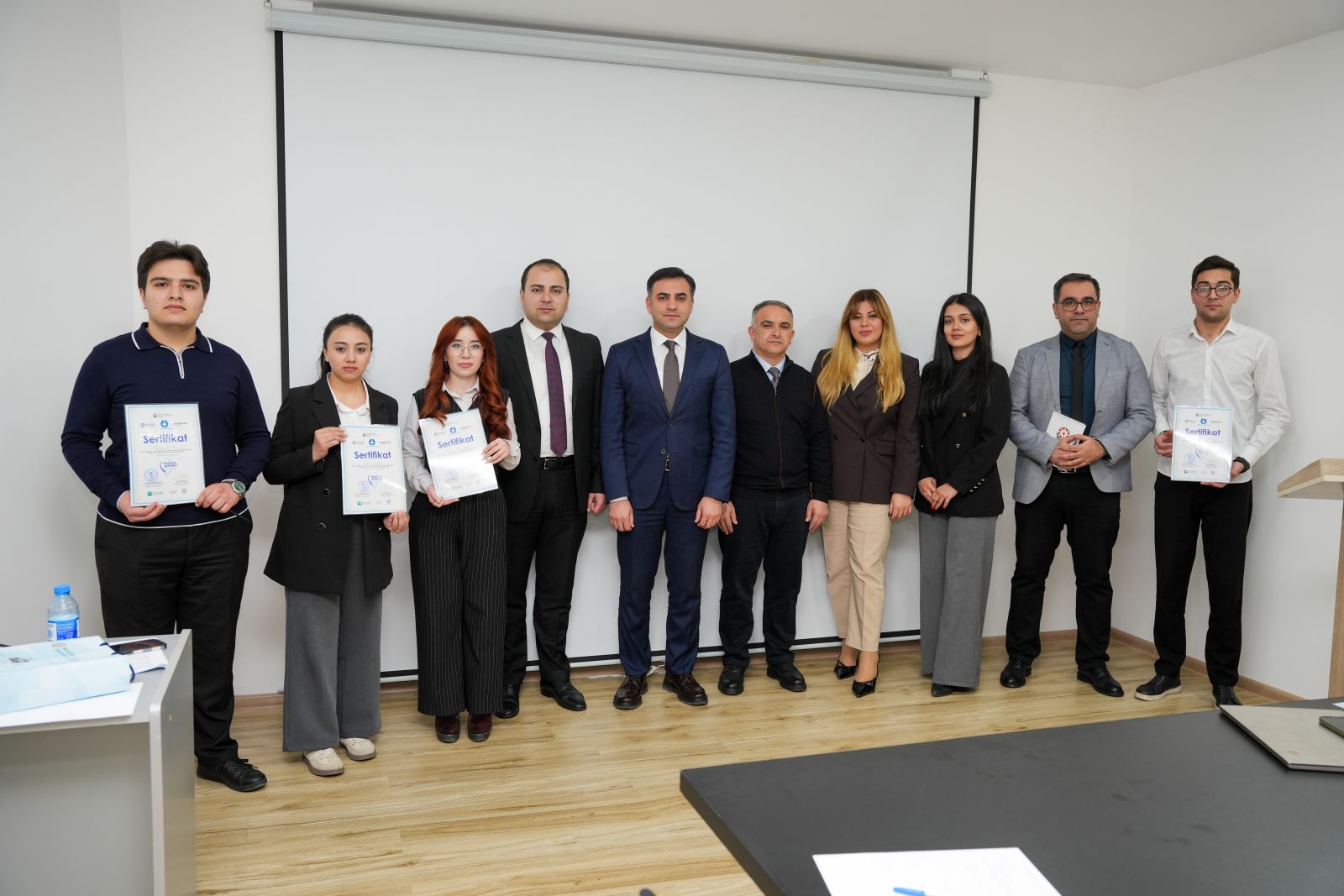
In the next part of the training, students of Baku Business University presented their startup projects. Students introduced their ideas, explaining the purpose of their startup projects, target audience, problems addressed, implementation mechanisms, and development potential. In addition, mentoring services and interactive startup discussions were organized for project presentations. At the end of the training program, certificates were awarded to students of Baku Business University.
On the final day of the program, a cultural tour was organized for participants to explore the rich architectural heritage of the city of Shusha. As part of the tour, participants visited Jidir Plain, the Molla Panah Vagif Mausoleum Complex, Yukhari Govhar Agha Mosque, the Bullet-damaged Statues, the Palace of Khurshidbanu Natavan and Khan Gizi Spring, the monument to Uzeyir Hajibeyli and the Mulberry Garden where he composed his works, Shusha Fortress, and Isa Spring.